




.png)



KC Energy Efficiency Certification in Korea
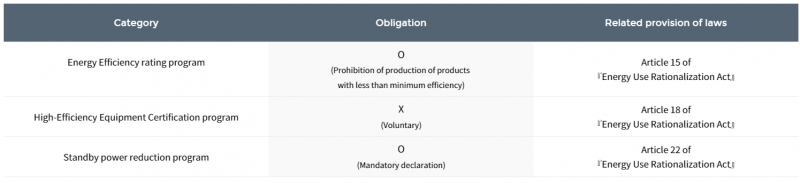
In Korea, there are 3 main types of Energy Efficiency certification: - Energy Efficiency rating program - High-Efficiency Equipment Certification program - Standby power reduction program
1. Energy Efficiency rating program
The Energy Efficiency Rating Labeling Program is a program that mandates energy efficiency rating labels indicating the energy efficiency level for products that consume more energy and are more widely used. At the same time, the program also prohibits the production and sale of products that do not meet minimum efficiency requirements.
Energy performance ratings are labeled from 1 to 5 and apply minimum energy performance standards (MEPS), the lower limit on energy efficiency. Products that do not comply with MEPS are prohibited from production and sale.
Energy efficiency labeling requirements apply to 15 items among household appliances, lighting equipment and automobiles, while minimum efficiency requirements apply to 14 items.
Applicable product categories and label:
The Energy Efficiency Rating Labeling Program is a program that mandates energy efficiency rating labels indicating the energy efficiency level for products that consume more energy and are more widely used. At the same time, the program also prohibits the production and sale of products that do not meet minimum efficiency requirements.
Energy performance ratings are labeled from 1 to 5 and apply minimum energy performance standards (MEPS), the lower limit on energy efficiency. Products that do not comply with MEPS are prohibited from production and sale.
Energy efficiency labeling requirements apply to 15 items among household appliances, lighting equipment and automobiles, while minimum efficiency requirements apply to 14 items.
Applicable product categories and label:
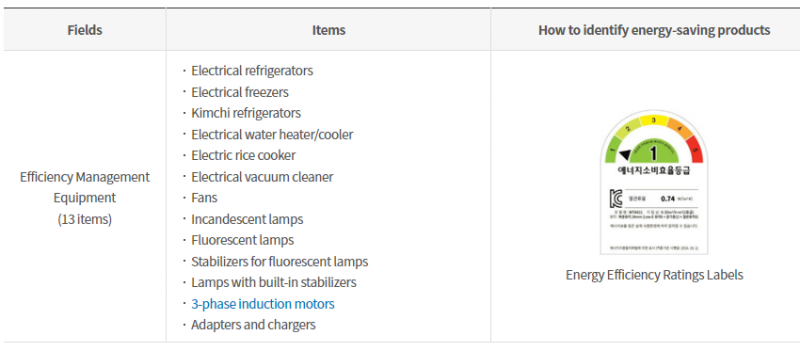
Note: Report the product to the Korea Energy Agency within 90 days of receiving the energy efficiency rating from the energy efficiency testing organization.
2. High-Efficiency Equipment Certification program
Under the Energy Use Streamlining Act, this efficiency certification program certifies products at a certain level of energy efficiency or higher to promote the use of high-efficiency energy equipment , such as high-performance induction motors. The program has been implemented since December 1996.
2. High-Efficiency Equipment Certification program
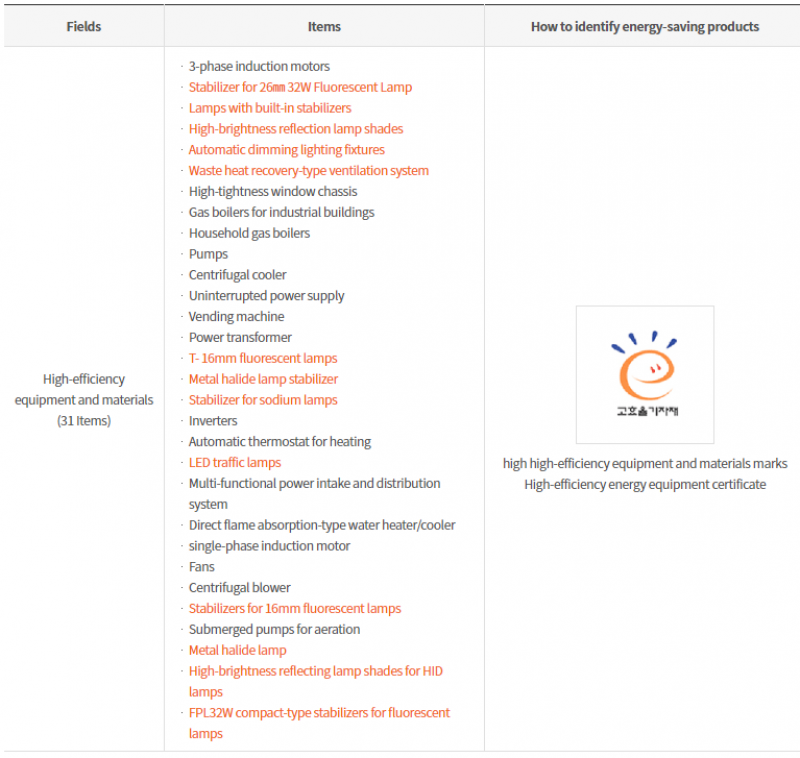
Under the Energy Use Streamlining Act, this efficiency certification program certifies products at a certain level of energy efficiency or higher to promote the use of high-efficiency energy equipment , such as high-performance induction motors. The program has been implemented since December 1996.
3. Standby power reduction program
The Standby Power Reduction Program is a mandatory reporting system to expand the supply of outstanding standby power reduction products that reduce standby power consumed when electronic products are not in use and to promote the development of related technologies. Manufacturers (importers) may mark energy saving marks on products that meet the published standby power reduction standards, and if they do not meet these standards, they must display a standby power warning sign. However, voluntary standards are applied to automatic power saving control devices, hand dryers, servers, and digital converters among target items.
Domestic manufacturers (domestic products) and domestic importers (imported products) report products directly on the Korea Energy Agency website. There is no cost to report the product, and the report must be completed within 60 days from the date of issuance of a test report from a standby power designation testing institute or the date of issuing a test report on its own.
Applicable product categories:
The Standby Power Reduction Program is a mandatory reporting system to expand the supply of outstanding standby power reduction products that reduce standby power consumed when electronic products are not in use and to promote the development of related technologies. Manufacturers (importers) may mark energy saving marks on products that meet the published standby power reduction standards, and if they do not meet these standards, they must display a standby power warning sign. However, voluntary standards are applied to automatic power saving control devices, hand dryers, servers, and digital converters among target items.
Domestic manufacturers (domestic products) and domestic importers (imported products) report products directly on the Korea Energy Agency website. There is no cost to report the product, and the report must be completed within 60 days from the date of issuance of a test report from a standby power designation testing institute or the date of issuing a test report on its own.
Applicable product categories:

Standby power warning label:
Standby power warning label (warning label) is a mandatory label that is displayed to awaken consumers’ awareness of products that do not meet the standby power reduction standards. On the other hand, the energy saving mark that can be affixed to the product that satisfies the standard can be applied arbitrarily.
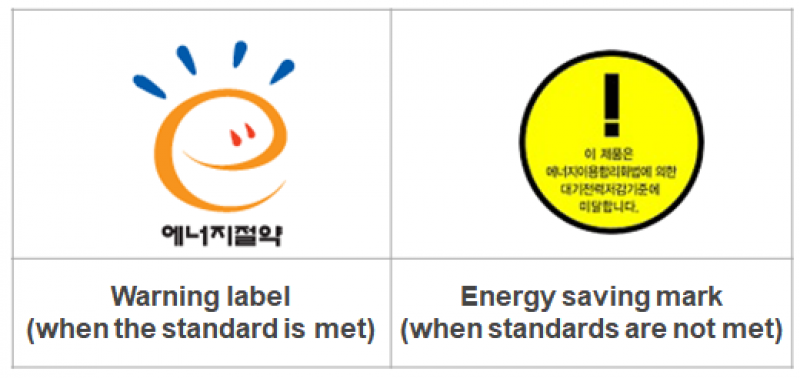
Standby power warning label (warning label) is a mandatory label that is displayed to awaken consumers’ awareness of products that do not meet the standby power reduction standards. On the other hand, the energy saving mark that can be affixed to the product that satisfies the standard can be applied arbitrarily.
Contact information for consultation:
GCL (HCM) COMPANY LIMITED
Hotline: 0393423091 | Hanoi: 02473099929
Email: hcm@gclab.org | louise.vietnam@pcn-global.com
Office: No. 27, Street 12, Khang Dien Residential Area, Phuoc Long B Ward, Thu Duc City, Ho Chi Minh City
Testing Lab: No. 115, An Phu Alley 04, An Phu Ward, Thuan An City, Binh Duong Province.
GCL (HCM) COMPANY LIMITED
Hotline: 0393423091 | Hanoi: 02473099929
Email: hcm@gclab.org | louise.vietnam@pcn-global.com
Office: No. 27, Street 12, Khang Dien Residential Area, Phuoc Long B Ward, Thu Duc City, Ho Chi Minh City
Testing Lab: No. 115, An Phu Alley 04, An Phu Ward, Thuan An City, Binh Duong Province.
